

Detector-to-Scout Distillation
This repository is the companion code of the paper Boxes to Scores: Distilling Box-Supervised Defect Detectors into Compact Image-Level Anomaly Scouts: it turns a detector's cached predictions into pseudo-box targets, distills them into a compact student (RT-Scout, 6.81 M parameters) that outputs one image-level anomaly score, and runs that student in PyTorch or ONNX without the teacher.
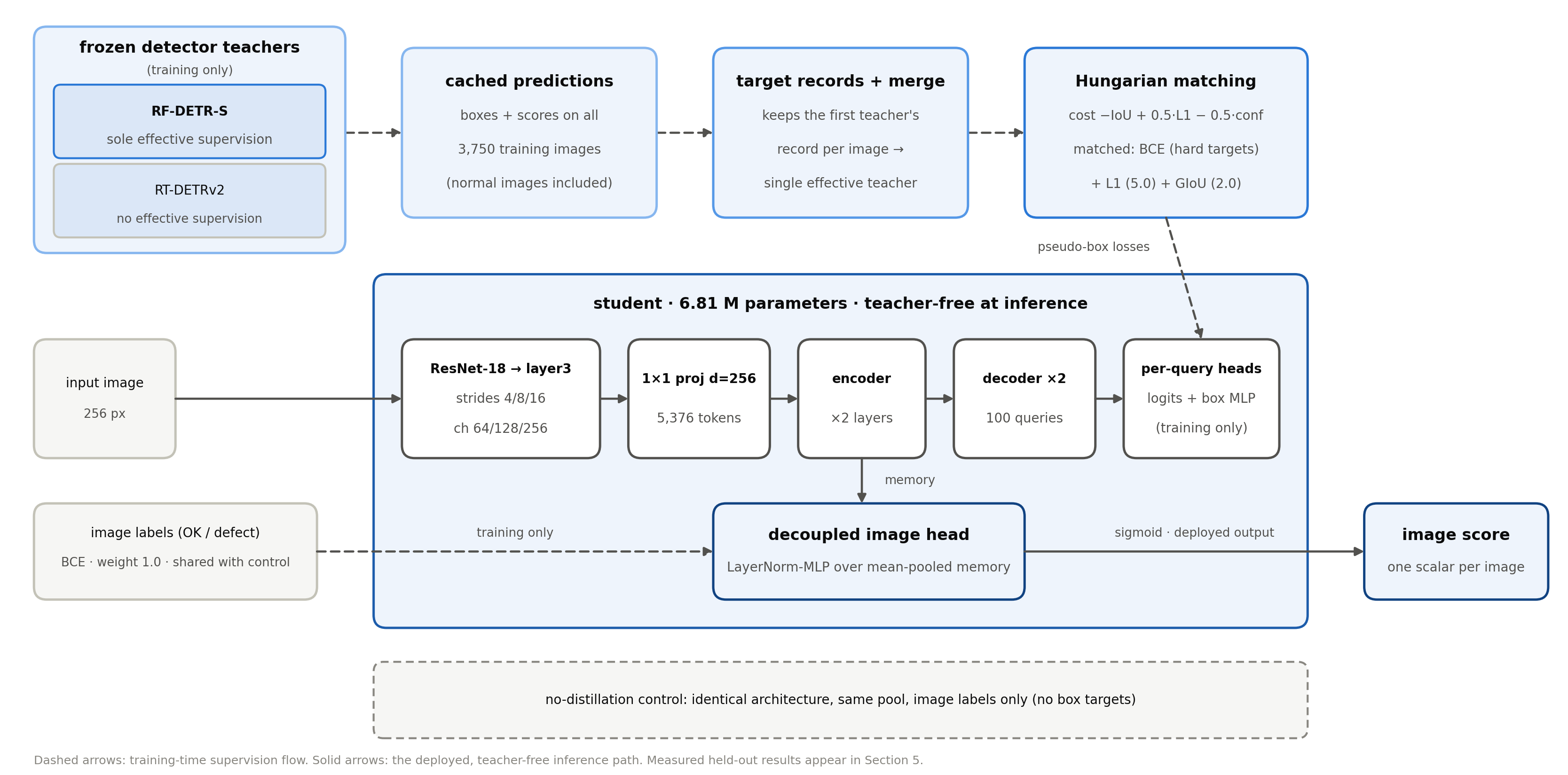
Figure 1 of the paper: the pipeline as implemented.
Read the paper: Boxes to Scores (PDF).
The pipeline has three stages, one command each:
- Targets. You run your detector once over the training images and save its predictions as JSONL.
build_targetsturns them into one target record per image: the predicted boxes and their confidences. No detector is loaded by this repository. - Distillation.
trainmatches each image's target boxes to the student's 100 queries with the Hungarian algorithm and trains the student on the matched-query losses plus a binary cross-entropy against the image's OK/NOK label. - Deployment.
inferandexport_onnxrun the student alone: one forward pass, one score in[0, 1], higher meaning more likely defective.
Two details of the paper's implementation are kept as they were measured: matched queries learn toward a hard target of 1.0 (the teacher's confidences are stored but not used by the loss), and when several teachers are merged, the first one's record for an image wins.
Installation
git clone https://github.com/rosepetal-ai/rosepetal-research-detector-to-scout-distillation.git
cd rosepetal-research-detector-to-scout-distillation

python -m venv .venv && source .venv/bin/activate
pip install -r requirements.txtThe package is not installed with pip: run its tools from the repository root as python -m detector_to_scout.<tool>, or put the root on PYTHONPATH to import it.
Requirements
- Python 3.10 or newer.
- The packages of
requirements.txt:torch>=2.1,timm>=0.9,scipy>=1.10,numpy>=1.24,pyyaml>=6.0,pillow>=9.0, and for ONNXonnx>=1.14andonnxruntime>=1.16. Without SciPy the matching falls back to a greedy algorithm and the results will differ from the paper. - A CUDA GPU for training: the paper recipe is 30,000 steps. Inference also runs on the CPU.
- Network access the first time a model is built with
pretrained: true(the paper recipe):timmdownloads the ImageNet weights of ResNet-18 once. - Your own data: images with OK/NOK labels and a box-supervised detector's predictions over the training images. Neither a dataset nor a detector is included; the paper uses MVTec AD.
Documentation
| Page | Contents |
|---|---|
| Data and targets | The image manifests, the teacher-predictions format, adapters for common detectors, building the targets, merging teachers |
| Training | The paper recipe, configuration keys and options, run outputs, resuming, fine-tuning, the student and its loss |
| Inference and export | Preprocessing, scoring with PyTorch, ONNX export and parity check, choosing an operating threshold |
| Paper results | What the paper measured, under which protocol, with its limits |
Usage
Smoke test
To try the whole chain on synthetic data (no download; the generated configuration builds the backbone without ImageNet weights):
python examples/make_dummy_dataset.py --out data/dummy
python -m detector_to_scout.build_targets \
    --manifest data/dummy/train.jsonl \
    --predictions data/dummy/teacher_predictions.jsonl \
    --teacher synthetic_teacher \
    --out data/dummy/targets/teacher_targets.jsonl
python -m detector_to_scout.train \
    --config data/dummy/smoke_config.yaml \
    --run-dir data/dummy/run --max-steps 20 --device cuda
python -m detector_to_scout.infer \
    --checkpoint data/dummy/run/final_state.pt \
    --manifest data/dummy/val.jsonl --device cuda --out data/dummy/scores.jsonl
python -m detector_to_scout.export_onnx \
    --checkpoint data/dummy/run/final_state.pt \
--out data/dummy/rt_scout.onnx --verifyWithout a GPU, use --device cpu.
Data
Write a training and a validation manifest, one JSON object per image with its path and an ok or nok label:
{"image_id": "grid_0001", "image_path": "images/grid_0001.png", "label": "ok"}
{"image_id": "grid_0107", "image_path": "images/grid_0107.png", "label": "nok"}Then run your detector over the training images only, without a confidence threshold, and save one line per image:
{"image_path": "images/grid_0107.png",
"boxes": [{"xyxy": [412.0, 105.5, 468.2, 160.0], "score": 0.93, "label": 0}]}Data and targets has the full format, adapters for RF-DETR-style and COCO-style outputs, and the leakage rules.
Targets
python -m detector_to_scout.build_targets \
    --manifest data/train.jsonl \
    --predictions teacher_predictions.jsonl \
    --teacher my_detector \
--out targets/teacher_targets.jsonlOnly predictions for images of the manifest are kept, so passing the training manifest keeps evaluation images out of the targets.
Training
Set manifests.train and manifests.val in configs/distill_default.yaml (the paper recipe: 30,000 steps, batch size 16, AdamW with learning rate 1e-4, seed 1337), then:
python -m detector_to_scout.train \
    --config configs/distill_default.yaml \
    --teacher-targets targets/teacher_targets.jsonl \
    --run-dir runs/distill_seed1337 \
--device cudaDuring the run, each step adds a line to train_log.jsonl; at the end the run scores the validation images and writes final_state.pt, predictions.jsonl, metrics.json (validation image AUROC) and summary.json to the run folder.
Inference
python -m detector_to_scout.infer \
    --checkpoint runs/distill_seed1337/final_state.pt \
    --images line_cam_001.png line_cam_002.png \
    --device cuda --out scores.jsonl

python -m detector_to_scout.export_onnx \
    --checkpoint runs/distill_seed1337/final_state.pt \
    --out runs/distill_seed1337/rt_scout.onnx \
--verifyThe score is threshold-free: choose the operating threshold on a validation set, as Inference and export shows.
Results
The paper trains one model for all 15 categories of MVTec AD and scores it on one held-out set of 802 images (614 normal, 188 defective), so its numbers are not comparable with per-category leaderboards.
- The distilled student reaches an image AUROC of 0.9614. The same architecture trained on the same 3,750 images with their image labels only reaches 0.9114 and 0.9320 at two seeds: the margins (+0.050 and +0.029) exceed the paper's pre-registered bar of 0.01, so the box-level teacher targets, not more image labels, carry the gain.
- It keeps 96.4 % of the AUROC of its strongest teacher, RF-DETR-S (0.9977), with about 4.7 times fewer parameters (6.81 M against 31.8 M), and scores above the second teacher, RT-DETRv2 (0.9344, 20.5 M).
- The student is a single training run on one benchmark, its latency was not measured, and the checkpoints that generated its targets were trained on a split that contains 711 of the 802 evaluation images. Paper results lists every measurement with its protocol and limits.
The repository does not include the teachers, their predictions, the paper's image pools or any trained checkpoint.
License
The repository's LICENSE file reads: "License: TBD by the authors. No license is granted until the authors select and publish one."